I have a 2005 360 Rinker Fiesta Vee and looking to replace the windless solenoid.

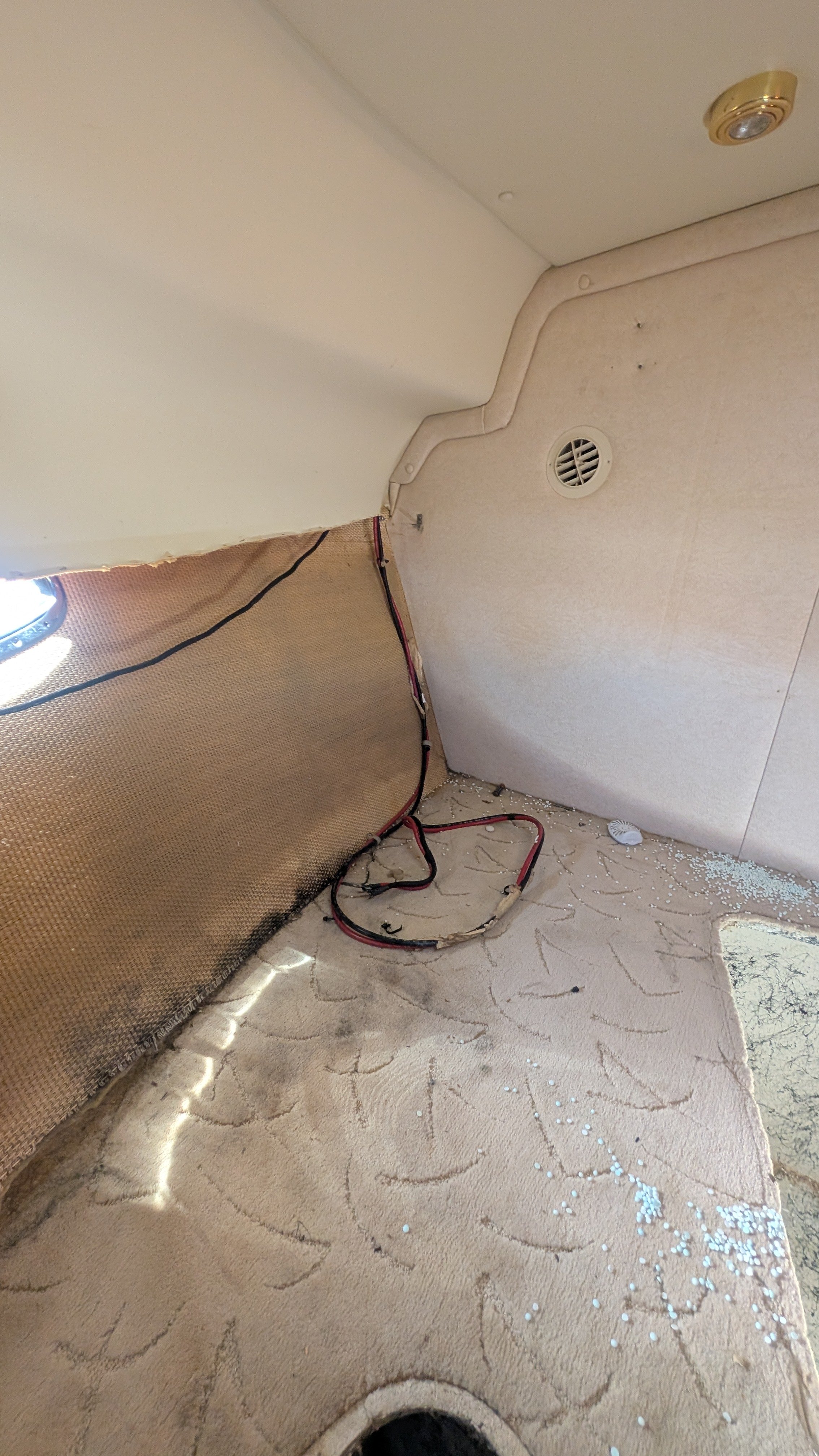
I have a 2005 360 Rinker Fiesta Vee and looking to replace the windless solenoid. Mine is bad I believe, but have NOT Found it yet. It is defiantly not in front of Helm bulkhead. I have traced two wires all the way from windless so it has to be somewhere either behind subwoofer or behind ice maker it isn't in the engine compartment. Any Thoughts?
Comments

  • rasburyrasbury Member Posts: 9,027 ✭✭✭✭✭
    Hopefully someone else can help you better- have you checked power at the switch?
  • FormulabenFormulaben Confirm Email, Member Posts: 238 ✭✭✭
    edited October 25
    FWIW my FV270 has no solenoids at all...just a switch and direct power using 6ga (?) wires.  I thought it was weird, but worth a thought since you're not getting any feedback. 
    2006 Fiesta Vee 270
  • rasburyrasbury Member Posts: 9,027 ✭✭✭✭✭
    edited October 26
    That's why I asked if he checked power at the switch at the helm. I'm sure, if it is factory wired, there is some mumbo jumbo electrical something between that switch and the battery ( that's my technical electrical talk), but would suspect the switch ( check for power ) and if good check for power at the motor/ wiring check.

    When we first bought our boat, that and many other things did not work. I pulled the switch off the helm and one of the terminals was just broken off the switch...

    We are getting to that time of the year northern boaters are moving on to winter toys, hunting...they drift back towards spring when they get the boat itch!
  • PickleRickPickleRick Member Posts: 4,406 ✭✭✭✭✭
    You guys can afford toys other than a boat in this economy??
  • goalie59goalie59 Member Posts: 357 ✭✭✭
    You might look in your aft cabin on the starboard side there is a panel ceiling that is held in by eight cap screws. That's where the windlass relay  was on my 2005 410. Not sure if you have that panel on your 360?
  • rasburyrasbury Member Posts: 9,027 ✭✭✭✭✭
    You should have a relay at your helm right by the helm control for up and down. Normally its left disconnected. A tab will be sticking out the bottom you need to push up and re engage.  Are you familiar with that?
  • tricountytrailtricountytrail Member Posts: 261 ✭✭
    It is not a relay, I believe your taking about the windless circuit breaker on the dash.
  • YYZRCYYZRC Member Posts: 5,585 ✭✭✭✭✭


    @tricountytrail what gauge is the wire at the bow? 6 or 4?
    2006 390 EC
    2008 350 EC
    Georgian Bay
  • rasburyrasbury Member Posts: 9,027 ✭✭✭✭✭
    It is not a relay, I believe your taking about the windless circuit breaker on the dash.
    Correct- why would there be an additional relay?
  • IanIan Member Posts: 3,082 ✭✭✭✭✭
    If rasbury said:
    It is not a relay, I believe your taking about the windless circuit breaker on the dash.
    Correct- why would there be an additional relay?
    If you have a larger windlass the switch can’t handle the current so a relay is used like above. My310 had a 600 and no relay, when I replaced with the 1000 I added the relay.

    Regards,

    Ian

    The Third “B”

    Ravena Coeymans Yacht Club

    https://www.rcyachtclub.com/

  • rasburyrasbury Member Posts: 9,027 ✭✭✭✭✭
    So I'm still not sure i understand why the relay is needed- its just an additional on and off? What energizes the relay 
  • FormulabenFormulaben Confirm Email, Member Posts: 238 ✭✭✭
    What a Relay Does (How It Works)
    • Two Separate Circuits: A relay splits a system into two parts:
      • Control Circuit (Primary): Carries a small, safe voltage and current (like from a computer, micro-controller like an Arduino, or a dashboard button).
      • Load Circuit (Secondary): Carries high voltage or heavy current (like a car starter motor, home appliance, or industrial machine). [1, 2, 3, 4]
    • Mechanism: When you send power to the relay's internal coil, it creates a magnetic field (in electromechanical relays) or triggers a semiconductor state (in solid-state relays) to physically or electronically push the switch contacts together or apart. [1, 2, 3]

    Why We Need an Electrical Relay (The Need & Use)
    • Controlling High Power with Low Power: You cannot run thick, heavy-duty power cables through a tiny dash switch or a delicate circuit board. A relay lets a small 5V or 12V signal safely switch on a massive 120V or high-amperage load. [1, 2, 3]
    • Safety: It keeps high voltages and heavy currents away from human operators or sensitive control panels, reducing the risk of electric shock or fire. [1, 2]
    • Electrical Isolation: The control side and the load side are electrically separated, which protects fragile microprocessors or sensors from voltage spikes and noise. [1]
    • Automation and Logic: Relays allow electronic systems, timers, or computers to automatically turn devices on and off without a human needing to flip a physical switch. [1, 2, 3]
    • Remote Control: You can place the heavy load (like a horn or a fuel pump) far away from the control switch, using only a thin, lightweight wire to trigger the relay near the component. [1, 2]
    • Controlling Multiple Circuits: A single low-power signal can trigger a relay to open or close several different circuits at the exact same time. [1]
    2006 Fiesta Vee 270
  • rasburyrasbury Member Posts: 9,027 ✭✭✭✭✭
    edited November 5
    I'm going to have to read that a couple times, or at least a couple more bourbon less- but i and im sure others appreciate the explanation. Electrical, while I'm getting better at, is still a bit of a mystery to me sometimes. Well, most of the time. We all have our talents! I'll go back through this. I'm sure i will have questions!
  • IanIan Member Posts: 3,082 ✭✭✭✭✭
    edited November 6
    To add to what @Formulaben said, in the above the relay is not just an on/off relay but an on off on relay where it sits in the off position. When the switch is activated one way it powers the relay to one on position, when switched the other it switches to the other. It is powered by the switch activating it via the blue and green wires and when in one on position (drop) it feeds the +ve red incoming (top of relay) to the red to the windlass; when switched to raise the +ve is fed to the black to make the motor go the other way. As the 900 needs more power it uses a relay, a 700 requires less so it can be switched directly as shown in the bottom left. The operation of the feeds and reversing it is the same.

    Regards,

    Ian

    The Third “B”

    Ravena Coeymans Yacht Club

    https://www.rcyachtclub.com/

  • FormulabenFormulaben Confirm Email, Member Posts: 238 ✭✭✭
    Think of a relay as using a tiny switch with tiny wire to send a *signal* to the relay (BIG SWITCH) that can handle the high power/current needed for whatever it is you're using, and this BIG SWITCH (relay) now connects the big wire to the big motor, which all 3 can safety utilize all that current. It saves you from using a really big switch and lots of big wired going all the way back to the helm. 

    It's exactly the same way you start the engine; the key switch is sending a small amount of current via a small wire to a relay that then closes a very high amperage engine starter circuit sending a lot of current to the starter.
    2006 Fiesta Vee 270
  • SpyderwebSpyderweb Member Posts: 963 ✭✭✭
    This is terrific.  Been familiar with the term, and even knew where a couple of them were on some previous boats, but never really knew how they worked, or why they were needed, other than they were electrical.  This is great.  Thanks.
  • grouch0jrgrouch0jr Member Posts: 282 ✭✭✭
    Fun fact, the tiny transistors in computers are essentially the same thing. Little electric switches.
    2006 342EC - Twin Mercruiser 350 MAG MPI Horizons
  • rasburyrasbury Member Posts: 9,027 ✭✭✭✭✭
    Now see @grouch0jr when you explain it like I'm 4 years old I can start to grasp it! Sounds like myself and others appreciate the lesson!
Sign In or Register to comment.