
Bilge blower & hose set-up
 TickledPink
Member Posts: 115 ✭✭
TickledPink
Member Posts: 115 ✭✭
When i bought my boat, on one side of the bilge blower was a hose that wasn't connected, the other end of which was sat on top of the water container. Nothing was attached to the other side of the blower.
See photos.
Can you please tell me how this should all be set up? I've bought new hose.
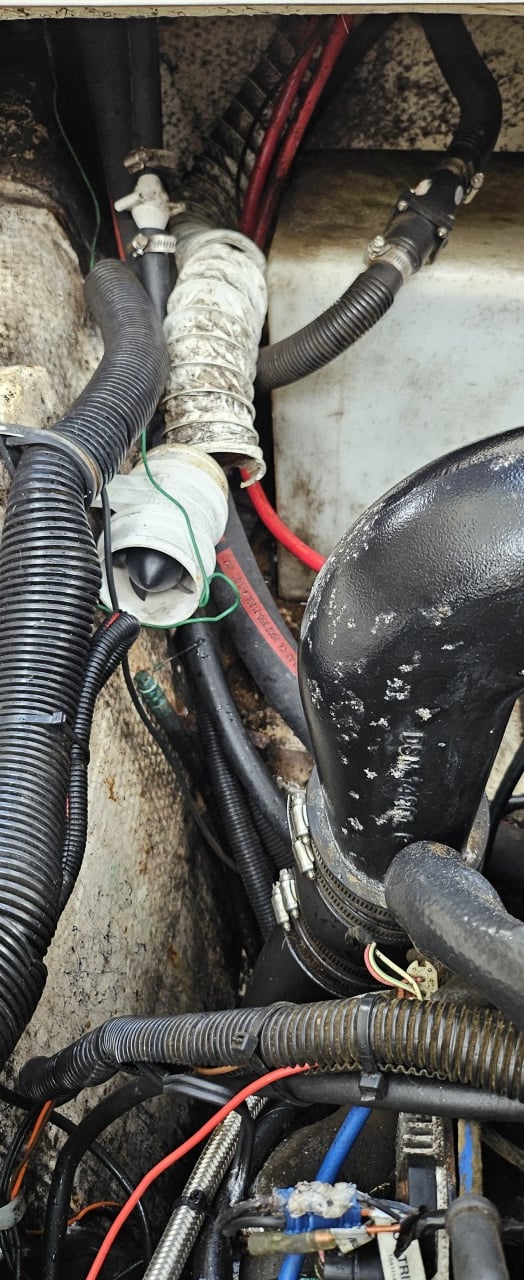
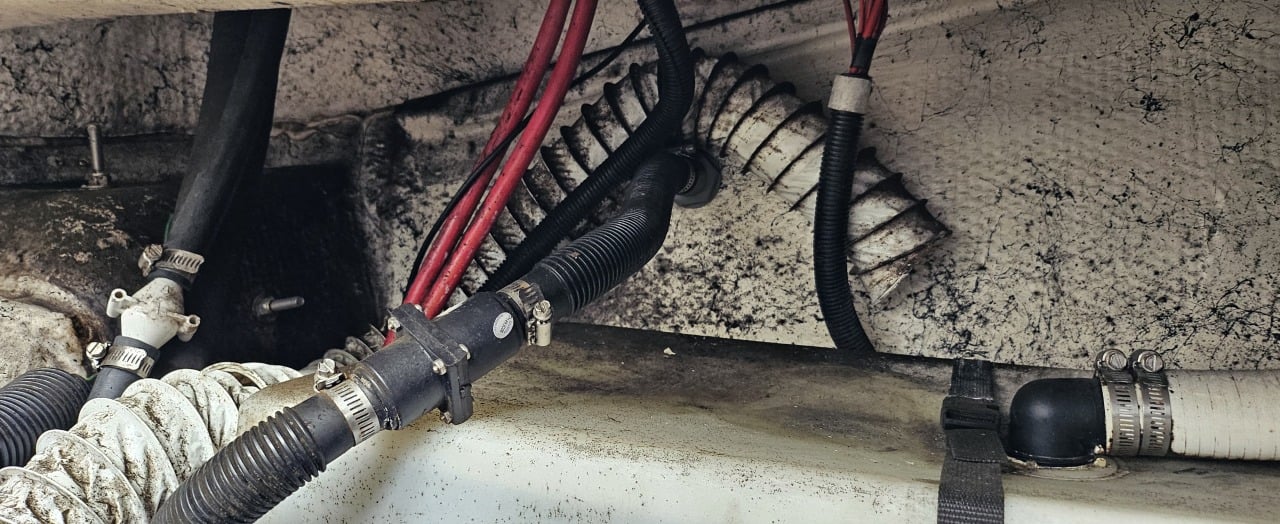
See photos.
Can you please tell me how this should all be set up? I've bought new hose.
Comments
Regards,
Ian
The Third “B”
Ravena Coeymans Yacht Club
https://www.rcyachtclub.com/
If you have explosive fuel vapor in the engine bay, the vapor will collect in the lowest part of the bilge. The intake side of the blower needs a hose that hangs all the way down to the lowest part of the bilge so it can grab that fuel vapor. The output hose connects to a vent on the side of the boat to evacuate the fuel vapor.
Also check the automatic fire extinguisher in the engine room. At the top of the fire extinguisher, there's a sensor with two wires. With your blower running, disconnect one of those wires. It should turn off the blower. The reason is that if you have a fire, you don't want the blower feeding fresh air into the engine room.
The blower does work. I also don't recall an automatic fire extinguisher.
Up $hit creek with this.
As far as your fire suppression, I'd be surprised if you had one. It may have been standard on rinkers larger boats-and / or optional- I don't have one, at least as far as I know! I've pulled my motor and transom assembly myself so I'm pretty confident. Our's is an 06 so maybe newer boats it was a safety requirement. Looks like commercial boats and recreational boats over 65' it is required. I would make sure you have two good extinguishers on board. I keep one up top and one below. I've used my microwave extensively but I've never used the achol stove. I have a gas grille on the transom- if something goes wrong I can kick the whole thing in the water. Plus, cooking smells in our size boats....yuk.
Welcome to the forum. Great info here. You can search forums for a pretty good spread of years. Since rinker is no longer in business it's been a concern how long this site would stay up- somebody must be footing the bill and no advertising...
If this is your first boat I'd suggest contacting a local coast guard or auxiliary in your area. I belive they will be happy to assist you with safety inspection of your new boat. I'd make that priority one if you are a new boaters. Breaking down sucks but nothing compared to a fire or explosion on the water. I always run that bilge blower on the way to the ramp and open the hatch, sniff the exhaust from the blower. If I break down I have seatow (another strong recommend depending on your boating travel). If I catch on fire....